AI Care Pod for hospitals
Use as a digital pre-screening, patient check-in, vitals and virtual-care touchpoint before or between conventional clinical encounters.
A next-generation AI health pod that brings patient self check-in, vitals screening, AI-assisted triage, telehealth and digital health-system connectivity into one compact care environment.
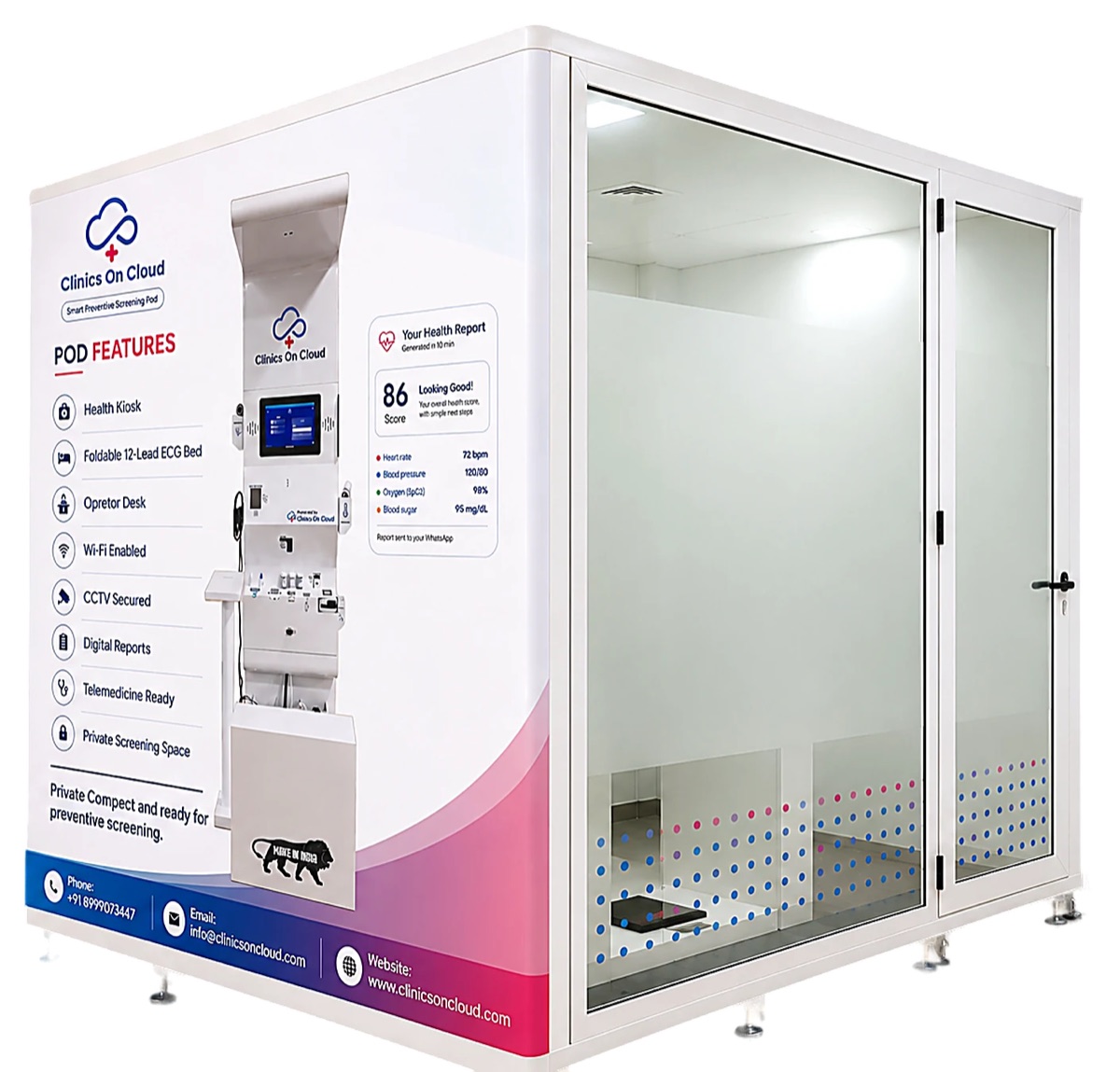
An AI Care Pod is more than an automated screening machine. It is a connected virtual care pod that can bring together self check-in, vitals, AI-assisted screening, digital health records, triage and remote doctor access within one guided station. It can act as an intelligent front door to care for hospitals, clinics, workplaces and assisted-care environments.
The smart care pod is designed to reduce fragmented steps and give patients one guided digital journey.

Build the page around outcomes buyers search for: automation, patient experience, intelligent screening, virtual care and interoperability.
The SEO opportunity is strongest when each audience gets a dedicated, natural use-case section rather than a page filled with repeated keywords.
Use as a digital pre-screening, patient check-in, vitals and virtual-care touchpoint before or between conventional clinical encounters.
Create an always-available preventive screening point for employees with digital reporting and access to remote care.
Digitise routine screening and patient intake so clinical teams can receive structured information before consultation.
Support repeat vitals monitoring, remote doctor access and connected health records closer to residents.
Bridge physical screening and remote consultation inside a single private, guided patient touchpoint.
Position the product as locally deployable connected-care infrastructure for healthcare providers, enterprises and institutional programmes across India.
Clinics On Cloud already positions its platform around API-based digital integration, including EMR/HMIS connectivity and healthcare-data workflows. The Care Pod page should make that architecture visible.
Avoid positioning them as substitutes in every case. Present the Care Pod as a more immersive virtual-care environment, while the Health Kiosk remains a strong structured screening point.
| Requirement | AI Care Pod | Health Kiosk |
|---|---|---|
| Primary experience | Guided digital-care journey | Structured preventive screening |
| Patient self check-in | Core workflow | Available depending on configuration |
| Vitals & diagnostics | Integrated | Integrated |
| AI-assisted report | Yes | Yes |
| AI triage workflow | Prominent care pathway | Can be integrated into screening workflow |
| Virtual consultation | Central part of pod experience | Available |
| EMR / HMIS integration | Designed as connected care endpoint | Available through platform integrations |
| Best fit | Hospitals, clinics, workplaces, virtual-care points | Preventive screening, institutions, public-health programmes |
Final pricing should depend on the pod fabrication, screening devices, number of parameters, AI modules, telehealth setup, integrations, software licensing, installation and support.
Hospital intake, employee preventive health, outpatient screening, elderly-care monitoring and virtual consultation can require different device and software configurations.
Custom configuration · India & internationalAnswered by the team at Clinics On Cloud - the questions people actually search for before they enquire, with the answers they give on the phone.
An AI Care Pod is a connected healthcare station that can combine patient self check-in, vitals screening, AI-assisted reporting and triage, telehealth and digital health-system connectivity within one guided environment.
Core features can include digital patient registration, self-service screening, connected vitals and diagnostics, AI-assisted health reports, telemedicine, triage workflows, longitudinal records, analytics and API-based integration.
A telehealth pod primarily provides remote consultation. An AI Care Pod can extend that experience by adding connected screening, self check-in, digital reports, triage and system integration before the virtual consultation.
Yes, the Clinics On Cloud platform supports API-based integration workflows. The exact integration depends on the receiving system, approved data fields, interoperability standards and project scope.
Yes. That is one of the strongest use cases for the Care Pod: guiding a patient through registration and configured vitals before their clinical or virtual consultation.
A Health Kiosk is generally centred on structured health screening. An AI Care Pod can be positioned as a broader care journey combining screening, check-in, AI-assisted triage, consultation and health-system integration.
Pricing depends on the pod structure, device configuration, AI modules, telehealth setup, software, integration, installation and support. A project-specific quotation is the most accurate way to price the system.
This concept page positions Clinics On Cloud as the manufacturer and connected-health platform provider. Before publishing, the product name, technical specification and regulatory description should match the final commercial product documentation.
We started Clinics on Cloud with a simple belief - that the quality of your healthcare should not depend on your postcode. Whether you’re a government, corporate, NGO or entrepreneur - we built this for you.
+91 8999 073 447
Mon - Sat · 9 AM to 6 PM IST
sales@clinicsoncloud.com
Partnerships · Deployments · Support
www.clinicsoncloud.com
Products · Case Studies · News
Nighoje, Chakan MIDC
Pune, Maharashtra - 410501, India